

Overview
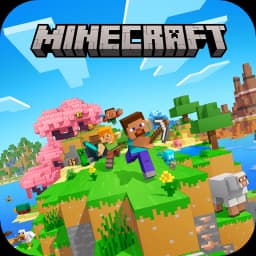
Minecraft is a simulation game published by Mojang, and it exists to handle managing systems, building, and long-horizon planning. That framing matters more than any feature list: the useful question is not how much this game can do, but whether it does that one job in a way you can rely on when you are distracted, in a hurry, or on a poor connection.
What follows separates what the store record shows from what is editorial judgement, so you can weigh the two differently.
Whether time is a mechanic or a paywall
Judged as a simulation game, Minecraft has to answer the same questions every title in this category does. Simulation games run on timers, and the question is what those timers are for. Waiting can be genuine pacing that gives decisions weight, or it can be an obstacle priced in currency — the two feel similar early and diverge sharply later.
Depth is the other measure. A simulation that stops presenting new decisions becomes a schedule of notifications rather than a game.
What the rating actually tells you
Its 4.6 average sits at the top of what mobile software realistically achieves. Scores in this range usually indicate that the core task works reliably and that updates have not disrupted long-standing behaviour.
Store rating counts for Minecraft are not recorded in this catalogue, so treat the average as a directional signal and check the current figure on the official listing.
How it compares within Simulation
At 4.6, Minecraft rates 0.1 above the Simulation median of 4.5 in this catalogue, ranking 3rd of 8. The category leader on rating is Melon Sandbox, which is the most direct comparison worth making before settling on this one.
On audience size, Solar Smash leads the category with roughly 1.7M ratings. A smaller audience is not a defect — it often accompanies a more specific design — but it does mean fewer edge cases have been found by other people first.
Permissions, data, and account requirements
Push notifications are central to the loop and often numerous. Purchase history drives offer timing, typically aligned to the longest waits.
Permissions in this category are usually modest. The thing worth checking is the advertising layer, since a free title is normally funded by sharing an advertising identifier with third-party networks.
Availability across stores
Minecraft is listed on both Google Play and the App Store. Cross-platform availability is convenient, but feature parity is not guaranteed — release timing, platform-specific features, and pricing frequently differ between the two versions.
One detail worth noting: Google Play files it under Simulation, while the App Store lists it under Games. That kind of split usually means the game sits between two use cases, and it is a useful hint about which audience each store thinks it is for.
Storage, battery, and device load
Minecraft will accumulate more storage than its install size suggests — caches, downloads, and offline content grow quietly. Whether that cache is manageable from inside the game, or only by clearing data and losing your settings with it, is a small design decision with a long tail.
Battery use is best measured after the fact. The system battery screen will tell you within a week whether background activity is proportionate to how much you actually use it.
Readability and accessibility
Turn the system text size up two steps and open Minecraft again. Interfaces that were designed at one size often break at another: labels truncate, buttons overlap, and controls move off screen entirely.
Contrast and touch-target size are the other two things worth a moment. Low-contrast secondary text and controls placed close together are the most common reasons an otherwise capable game becomes tiring to use for any length of time.
The developer behind it
Minecraft is published by Mojang. A developer's other listings are a useful and underused signal: a catalogue of one carefully maintained product reads very differently from dozens of near-identical titles, and the store makes that easy to check in a few seconds.
The response history under recent reviews is similarly informative. It shows whether reported problems reach anyone, which matters more than any support-page promise.
How to evaluate it yourself
Play past the tutorial to where build times lengthen. If the game becomes a series of reminders rather than choices, that is the shape of the long game.
It is worth doing deliberately rather than waiting to find out. The failure modes in this category are predictable, which makes them cheap to check for.
Verdict
Minecraft suits players who enjoy planning and will check where the timers lead. The rating supports that, though the store listing remains the authority on current pricing, permissions, and regional availability.
Start with the free tier, review the notification defaults on day one, and give one competitor a fair trial before you build a habit around this one.
Highlights
- Timers that give decisions weight
- New decisions well past the tutorial
- Notification control that is actually usable
- Rated 4.6 on Google Play
Limitations
- Wait times often lengthen into a paywall
- Notification volume can be high
- Late-game depth varies significantly
Frequently Asked Questions
What is Minecraft used for?
Minecraft is a simulation game from Mojang, intended for managing systems, building, and long-horizon planning. Whether time is a mechanic or a paywall is the part of the experience that most affects whether it works for you day to day.
Is Minecraft free?
Pricing, subscriptions, and in-app purchases vary by country and release, and can change between versions. Open the official store listing from this page to confirm the current terms before installing.
What permissions does Minecraft need?
Push notifications are central to the loop and often numerous. Purchase history drives offer timing, typically aligned to the longest waits. The store listing carries the authoritative, current permission list for your region.
Where can I download Minecraft?
This page links only to verified official listings — Google Play and the Apple App Store. Find Good Apps does not host or distribute application files.
How should I test Minecraft before relying on it?
Play past the tutorial to where build times lengthen. If the game becomes a series of reminders rather than choices, that is the shape of the long game.
Does Find Good Apps develop Minecraft?
No. Find Good Apps is an independent publication operated by Sophon LLC. It is not the developer, publisher, or distributor of Minecraft, and has no commercial relationship with Mojang.